What happens when a foreign charity introduces a development agenda that aligns with local social entrepreneurial initiatives? Will local entrepreneurs be seen as like-minded stakeholders, or as 'competition'? The story of the development of cycling on the Caribbean island of Nevis shows how agendas can clash despite everyone's good intentions.
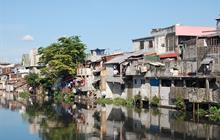
The Government of India has launched a grand housing scheme for a 'slum-free India'. But can grand schemes work when planners and policymakers neither understand the reality of the urban poor nor connect to their aspirations?
There are many celebrated ideas and personalities in urban development, but how many survive the test of time? Two writers reflect on the legacy of John Turner, a quiet hero of global urbanism.
How can we reimagine a public space divided by civil war, sectarianism and redevelopment? Rather than sophisticated urban design, Tanya Gallo argues that allowing public space to retain its indeterminacy will keep it accessible for all citizens.
Despite claims of lack of accountability and transparency on both sides, NGOs and governments need to learn to trust each other lest basic services for the urban poor continue to go undeveloped.
While Delhi turns its back on ragpickers by contracting out its solid waste management, Pune has successfully integrated its ragpickers into a formal workforce.
Marcus Tudehope recounts his first-hand impressions of the San Roque community in Quezon City, where 25,000 residents have been battling to remain in the city.
The Global Urbanist is an online magazine reviewing urban affairs and urban development issues in cities throughout the developed and developing world.
Its readers are drawn from the urban policy and international development sectors, and include urban planners, officers in local, national or international government agencies, civil society leaders, and researchers.