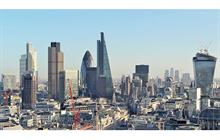
London’s ever evolving skyline serves as effective measure to understand the social and economic mechanisms of the city. Simon Hicks charts the transformations that have taken place in London over the past 400 years against the physical backdrop of the city and considers what the emerging skyline can tell us about London today.
What exactly are these places that are becoming proxies for public space, an otherwise rare commodity in Delhi? Letting no detail escape his eye, Yorim Spoelder goes flaneuring in the mall.
It's too easy to overlay an urbanist narrative onto the past month's protests. It's more important to see how the protests contradict even some pro-urban discourses, and to reform the world's police forces.
The Delhi Development Authority (DDA) continues to shift thriving urban communities into lifeless high-rise residential towers, ignorant of the economic base the existing neighbouroods provide.
The Economist conference 'Future Cities: managing Africa's urban transformation' was held in Lagos last month. A rosy picture for foreign investors, but what kind of future is being offered the ordinary African?
The Global Urbanist is an online magazine reviewing urban affairs and urban development issues in cities throughout the developed and developing world.
Its readers are drawn from the urban policy and international development sectors, and include urban planners, officers in local, national or international government agencies, civil society leaders, and researchers.