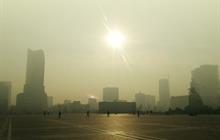
With one of the highest levels of air pollution of any city in the world, the Mongolian capital is learning how to reduce its levels of particulate matter and replacing tens of thousands of traditional heating stoves with cleaner alternatives.
Henrik Valeur confronts us with the health problems caused by motorised transportation, suggesting that mobility may not be about the balance between public and private, but between motorised and non-motorised.
Whereas governments are quick to scapegoat the chop bar owners of Accra, in reality they spend onerous sums of money on sanitation, an effort which should be supported by health policy.
While most are aware of the need for education and prevention, Noemi Reiner of ARCHIVE highlights the need for stable housing for people living with HIV/AIDS to lower transmission rates and reduce the physical and emotional risks of disease and stress.
Sheila Ochugboju sees much to admire in Mumbai's Dial 1298 for Ambulance but fears the middle class is too small in her own Accra for the model to be replicable there.
Aware that an earthquake like Haiti's could strike Dhaka, a city seven times more populous, engineers and government leaders in the Bangladeshi capital are discussing how to reinforce buildings and prepare emergency services, to prevent tragedy on an unimaginable scale.
While thousands struggle with HIV in Nairobi's slums, a growing national food crisis and the closure of food aid programmes due to lack of funding are a greater concern for afflicted residents.
The Global Urbanist is an online magazine reviewing urban affairs and urban development issues in cities throughout the developed and developing world.
Its readers are drawn from the urban policy and international development sectors, and include urban planners, officers in local, national or international government agencies, civil society leaders, and researchers.