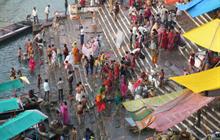
As the Kumbh Mela festival closes in Allahabad, Kristen Teutonico considers the infrastructure and organisational talent required to support the creation of a tens-of-millions pop-up city every three years, and wonders why the lessons aren't being applied to India's permanent mega-cities.
Martha Bridegam describes Dignity Village and other settlements setting out to prove that informal housing can be just as peaceful, lawful and neighbourly as any other residential area.
Sonia Dias argues for a holistic approach to solid waste management that recognises the economic and environmental benefits of including informal waste pickers in planning.
Whereas governments are quick to scapegoat the chop bar owners of Accra, in reality they spend onerous sums of money on sanitation, an effort which should be supported by health policy.
Sana'a, the capital of Yemen and facing one of the most severe water crises of any city in the world, may have an answer in a startlingly simple project to help households collect their own rainwater.
While Delhi turns its back on ragpickers by contracting out its solid waste management, Pune has successfully integrated its ragpickers into a formal workforce.
The Global Urbanist is an online magazine reviewing urban affairs and urban development issues in cities throughout the developed and developing world.
Its readers are drawn from the urban policy and international development sectors, and include urban planners, officers in local, national or international government agencies, civil society leaders, and researchers.