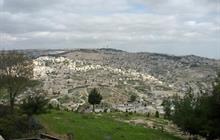
While working within Palestinian communities in East Jerusalem, Anne Hofhuis reports on the challenges the NGO sector faces as it tries to counter the destructive impacts of Israeli planning policies in the city.
Alia Dharssi caught up with sociologist Saskia Sassen at the London School of Economic’s Urban Age Conference in New Delhi on November 15th. She talks about the governance challenges facing the world’s cities today and the ways in which average people can voice their concerns in the face of big money.
Emily E Straus takes on three critical issues which have shaped the Los Angeles suburb: the history of race and educational equity, the relationship between schools and place, and the intersection of schooling and municipal economies.
How policies surrounding issues such as decentralisation, food security and armed conflict must now adapt to the maturing of Africa's urbanisation experience.
We argue that the Habitat III Agenda currently on the table comprises several serious omissions, including any acknowledgement that conflict routinely arises in urban areas.
What should have been a simple walk to trace the route of an ancient aqueduct becomes fraught with geopolitical complexities as six hikers transgress the various spatial regulations that fragment the territory.
In a quiet London suburb two rival "neighbourhood forums" put forward under new "localism" laws have brought religious and cultural divisions into the light.
The Global Urbanist is an online magazine reviewing urban affairs and urban development issues in cities throughout the developed and developing world.
Its readers are drawn from the urban policy and international development sectors, and include urban planners, officers in local, national or international government agencies, civil society leaders, and researchers.