The Global Urbanist

News and analysis of cities around the world

Europe and Central Asia

RSS Feed

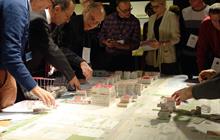
Who inspires you? There are many celebrated ideas and personalities in the field of urban development, but how many survive the test of time? John Turner's argument that housing is most successful when produced through the autonomy of its residents remains popular, influential, but often misunderstood. Today two writers, representing very different generations, reflect on the legacy of a quiet hero of global urbanism.

Popular Articles

  1. 'Smart cities' slowly getting smarter
  2. The other 'middleweights': new hopes for old cities
  3. Amsterdam cycling
  4. London Conferences on Food and Cities

Recent Headlines

Eminent housing and urban development consultant Geoffrey Payne offers a personal view on the international framework governing the global urban agenda, taking aim at the retrograde steps taken by international agencies in recent years, and exhorting professionals to break out of their silos and to reach beyond preaching to the converted.

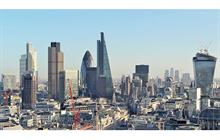
There is much to be commended, and much to be weeded out, in Foster's vision for a new London airport in the Thames Estuary and the proposal for a new transport, utilities and data spine running the length of the country.

The 'smart city' concept has existed for several years, but only now, with some trial and error, are we seeing the real fruits of these efforts coming to light.

Governments in many places can exhibit a loss in the basic competencies required for effective urban planning. In the UK and India, some of the slack is picked up by the private and non-profit sectors, with surprising and innovative results.

Jobs

Events

-


TOWARDS AN EMERGING GEOGRAPHY OF GENTRIFICATION IN THE GLOBAL SOUTH
Seminar series funded by the Urban Studies Foundation and the Urban Studies Journal Seminar Series Competition ORGANISED BY
Professor Loretta Lees (Department of Geography, King’s College London)
Dr. Hyun Bang Shin (Department of Geography and Environment, London School of Economics)
Dr. Ernesto López (Department of Urban Planning, University of Chile, Chile)
Dr. Hilda Herzer (Department of Sociology, University of Buenos Aires, Argentina) WORKSHOP SCHEDULE
London, March 23-24, 2012 (for participants from Asia and Africa)
Santiago, April 26-27, 2012 (for participants from Central and South America) OBJECTIVES
The overall aim of this seminar series is to broaden our understanding of gentrification drawing conceptually on the ‘new’ literature on comparative urbanism and policy mobilities and practically on the knowledge of gentrification researchers working on/in the Global South. We want to avoid the assumption that gentrification is simply ‘expanding’ towards the global periphery, as if it is an imported new phenomenon that builds upon emerging real estate markets. It may be possible to hypothesise that gentrification has been taking place in various guises in different parts of the Global South since the 1960s. It may be possible that only the systematic and social scientific observation of these processes is something new, but not the actual phenomena it/themselves. In this regards, the experiences in the Global South deserve careful attention and revised conceptualization beyond the usually accepted definitions of gentrification that are confined to the Global North. As Loretta Lees points out in her recent Progress in Human Geography paper:

  • There is disconnection between gentrification literature and other literature that addresses urban processes in the global South (e.g. slums literature).
  • There is an urgent need to question the meaning of gentrification and to evaluate its “usefulness and applicability…as a conceptual frame for processes in the Global South”.
  • It is necessary to recognise the politics of the term gentrification, and the consequences of its replacement by more indigenous expressions.
  • It is imperative for researchers to learn “through different (non Anglo-American) urban theory cultures of the city”.
In response to this we bring together those researching gentrification in the Global South to create a dialogue and hence challenge theoretical and epistemological perspectives on gentrification that have been produced out of the experiences of the Global North and have become hegemonic in the literature on gentrification. Our proposal is that the seminar participants take an historical perspective when focusing on gentrification in the Global South, that they look at sweat equity (pioneer) gentrification but also relevant state-led policies of social cleansing in central cities, and displacement of the poor and minorities as class projects. Some of the more specific questions we hope participants will consider are:
  • How does a gentrification blueprint account for and anticipate the geographical and historical specificity of places?
  • What is the complex geographical contingency to gentrification?
  • How do gentrification policies emerge in different countries – is it by repetition (copying), borrowing (aspects that suit) or is it reinvented (for a different context)? Is it indigenous?
  • Is gentrification in these regions a new phenomenon or can it be regarded as part of a historical continuity of urban segregation and class-led urban reconfiguration?
Furthermore, we ask participating researchers to question how gentrification theory as an analytical lens reconciles with those issues that are frequently visited in the urban development literature that examines cities in the Global South. These issues may include (but are not limited to):
  • Land as asset/s
  • Complexity of formal/informal property rights
  • Diverse formal/informal tenure distribution
  • Housing and land speculation
  • Ethnic division and social segregation
  • Infrastructure development and development-induced displacement
  • Creation of exclusionary spaces for urban elites and the new rich
  • Colonial legacies embedded in urban fabric
  • State-led developmentalism and the role of public policies
  • Planning regulations as state instruments.
WORKSHOP STRUCTURE
The following have been invited and agreed to present (see below) but we would like to open the invitation now more widely to others researching in this field, either to present papers and/or attend the workshops. LONDON SEMINAR MARCH 23-24
DAY 1: Invited Speakers:
Tou Chuang Chang (Singapore)
Sue-Ching Jou (Taiwan)
Yoshihiro Fujitsuka (Japan)
Soohyun Kim (South Korea)
Adrienne La Grange (Hong Kong)
Urmi Sengupta (India)
Arif Hasan (Pakistan)
Nhamo Smasuwo (South Africa)
Invited discussants: tbc DAY 2: Open invitation to other speakers SANTIAGO SEMINAR APRIL 26-27
DAY 1: Invited Speakers:
Victor Delgadillo (Mexico)
Christopher Gaffney (Brazil)
Paulo Sandroni (Brazil)
Neil Turnbull and Elke Schlack (Chile)
María Carla Rodríguez (Argentina)
Michael Janoschka (Spain)
Invited discussants: tbc DAY 2: Open invitation to other speakers OPEN INVITATION TO OTHER PRESENTERS AND TO ATTENDEES WORKSHOP FEE
There is a nominal fee of £20 a day for the waged and £10 a day for the non-waged (for London) and £10 a day for the waged and £5 a day for the non-waged (for Santiago).

-

The southern Italian city of Naples has offered to host the sixth session of the World Urban Forum.

London

Inspiring urbanists: John F. C. Turner

There are many celebrated ideas and personalities in urban development, but how many survive the test of time? Two writers reflect on the legacy of John Turner, a quiet hero of global urbanism.

Amsterdam

Cycling up and up in hilly San Francisco

Despite its hilly topography and a legal injunction that prevented it from developing its bicycle network for four years, cycle use in San Francisco has grown to set the standard for US cities.

Turin

The other 'middleweights': new hopes for old cities

A bold future may await rust belt cities in North America and Europe if asset manager Pippa Malmgren's vision of smart manufacturing hubs and recent research on revitalised industrial centres come to fruition.

Voronezh

No articles found

Yekaterinburg

No articles found

Volgograd

No articles found

Error loading Razor Script

Hot Topics

Integrated planning
Is Africa really urbanising rapidly?
Walking and cycling
Cycling up and up in hilly San Francisco
City politics
Fixing the global urban agenda: a personal view
International development
Inspiring urbanists: John F. C. Turner

In Other Cities

Yerevan
Antwerp
Baku
Sofia

On London

The idea of people being in control of designing, building and managing their housing needs remains powerful and inspirational, and the dangerous lesson history shows us is that it's too easily co-opted into ugly parodies by international agencies.

Read full article

Events

Post an event
-
-
-

Jobs

Post a job
BSHF Research Officer (International Programme)
Coalville, Leicestershire, UK

About

The Global Urbanist is an online magazine reviewing urban affairs and urban development issues in cities throughout the developed and developing world.

Its readers are drawn from the urban policy and international development sectors, and include urban planners, officers in local, national or international government agencies, civil society leaders, and researchers.

Find out more


Advertise on this site

GU