On London's dying libraries
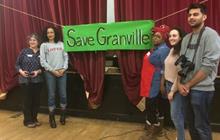
With libraries increasingly likely to shutter their doors in the digital age, Zung Nguyen discusses the risks London faces as it emphasises public housing over other kinds of social institutions.
With libraries increasingly likely to shutter their doors in the digital age, Zung Nguyen discusses the risks London faces as it emphasises public housing over other kinds of social institutions.

Asit K. Biswas and Kris Hartley discuss how secondary cities in New Zealand might retain their relevance in a spatially imbalanced economy.

Frances Brill explains how innovative policy that targets 18- to 24-year-olds' struggles with finding affordable housing could be the key to igniting fervour for electoral politics among this group.

Emily E Straus takes on three critical issues which have shaped the Los Angeles suburb: the history of race and educational equity, the relationship between schools and place, and the intersection of schooling and municipal economies.
Frances Brill wonders whether the plans to deliberately gentrify the areas most affected by London's riots will target investment to the creation of badly needed jobs.
Henrik Valeur visits Bangalore to see how researchers at the IISc are integrating bicycle sharing and electric vehicles on campus, a potential prototype for transit systems across India's cities.
What happens when a foreign charity introduces an agenda that aligns with local entrepreneurial initiatives? Will locals be seen as like-minded stakeholders or as 'competition'?

Kris Hartley is an independent consultant and researcher focusing on economic policy, urban planning, and governance innovation in Asia.
Sign up here for email updates
The Global Urbanist is an online magazine reviewing urban affairs and urban development issues in cities throughout the developed and developing world.
Its readers are drawn from the urban policy and international development sectors, and include urban planners, officers in local, national or international government agencies, civil society leaders, and researchers.
