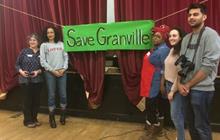
On London's dying libraries
With libraries increasingly likely to shutter their doors in the digital age, Zung Nguyen discusses the risks London faces as it emphasises public housing over other kinds of social institutions.
With libraries increasingly likely to shutter their doors in the digital age, Zung Nguyen discusses the risks London faces as it emphasises public housing over other kinds of social institutions.
Tom Archer argues that eliminating homelessness by 2030, a key recommendation of the UN’s Special Rapporteur on Adequate Housing, requires committed governments and an active civil society.
Simon Hicks charts the transformations that have taken place in London over the past 400 years against the physical backdrop of the city and considers what the emerging skyline can tell us about London today.

Two years after the introduction of Permitted Development Rights, Zoe Green argues that the policy is threatening the local creative economy in UK cities by pricing out small and medium sized enterprises.
Frances Brill explains how innovative policy that targets 18- to 24-year-olds' struggles with finding affordable housing could be the key to igniting fervour for electoral politics among this group.
We argue that the Habitat III Agenda currently on the table comprises several serious omissions, including any acknowledgement that conflict routinely arises in urban areas.
The Royal Docks in east London were left behind by the containerisation of shipping. In the wake of the Olympics, planning efforts and business investment is once again focused on the area.

Zoe Green is a senior planning consultant with Atkins Ltd, with experience in policy and masterplanning projects for both private and public sector…
Sign up here for email updates
The Global Urbanist is an online magazine reviewing urban affairs and urban development issues in cities throughout the developed and developing world.
Its readers are drawn from the urban policy and international development sectors, and include urban planners, officers in local, national or international government agencies, civil society leaders, and researchers.
