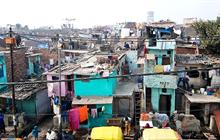
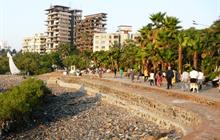
As part of our series on eliminating violence against women and girls in our cities produced in collaboration with the Huairou Commission, Mumbai architect Pallavi Shrivastava offers a personal reflection on how the threat of violence forces women not only to change our movements but also prevents us from enjoying our cities, and thus from helping to make them the cities we want them to be.
From Western rules of thumb about the affordability of mortgages to an obsession with high-rise private sector developments, India's approach to affordable housing is full of hopelessly outdated assumptions.
As Mumbai progresses its newest 20-year Development Plan, Kristen Teutonico argues that many small interventions might do more for the city than a grand plan that may ultimately be ignored entirely.
Witness' documentary People Before Profit portrays forced evictions around the world, expressing the trauma that citizens feel when their homes and possessions are violently taken from them.
While India's new model tenancy act is praised as a liberal solution to the lack of affordable housing, Robin Houterman argues that it will worsen the shortage and weaken low-income households in Mumbai.
Slum neighbourhoods are teeming with industry and commerce, yet the policy sphere still tends to treat them as residential spaces alone. What are the consequences of this misconception, and is it time to invoke a right to space, not just of housing?
Sheila Ochugboju sees much to admire in Mumbai's Dial 1298 for Ambulance but fears the middle class is too small in her own Accra for the model to be replicable there.
The Global Urbanist is an online magazine reviewing urban affairs and urban development issues in cities throughout the developed and developing world.
Its readers are drawn from the urban policy and international development sectors, and include urban planners, officers in local, national or international government agencies, civil society leaders, and researchers.