
Parks in Bangalore foster sustainable design
Architect Shruthi Guruswamy explores how urban design is fostering a sustainable ethos in Bangalore.
Architect Shruthi Guruswamy explores how urban design is fostering a sustainable ethos in Bangalore.
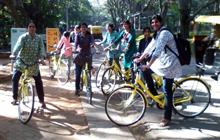
Henrik Valeur visits Bangalore to see how researchers at the IISc are integrating bicycle sharing and electric vehicles on campus, a potential prototype for transit systems across India's cities.

Henrik Valeur confronts us with the health problems caused by motorised transportation, suggesting that mobility may not be about the balance between public and private, but between motorised and non-motorised.
Simply creating urban policies that parallel India's rural policies won't fully solve the problem of urban poverty, especially when migrants and other groups fall into the cracks between the two policy regimes.
Governments in many places can exhibit a loss in the basic competencies required for effective urban planning. In the UK and India, some of the slack is picked up by the private and non-profit sectors, with surprising and innovative results.

Henrik Valeur is a Danish architect-urbanist based in Copenhagen. His work is available at http://www.henrikvaleur.dk .
Sign up here for email updates
The Global Urbanist is an online magazine reviewing urban affairs and urban development issues in cities throughout the developed and developing world.
Its readers are drawn from the urban policy and international development sectors, and include urban planners, officers in local, national or international government agencies, civil society leaders, and researchers.
